The short version
In the Yellow Pages era a name needed to be memorable and trademarkable. Now it also has to secure a domain, own a social handle, and be distinct in search. That is a harder brief, and it is why good names come from a structured process on a clear strategic foundation, not from a brainstorm.
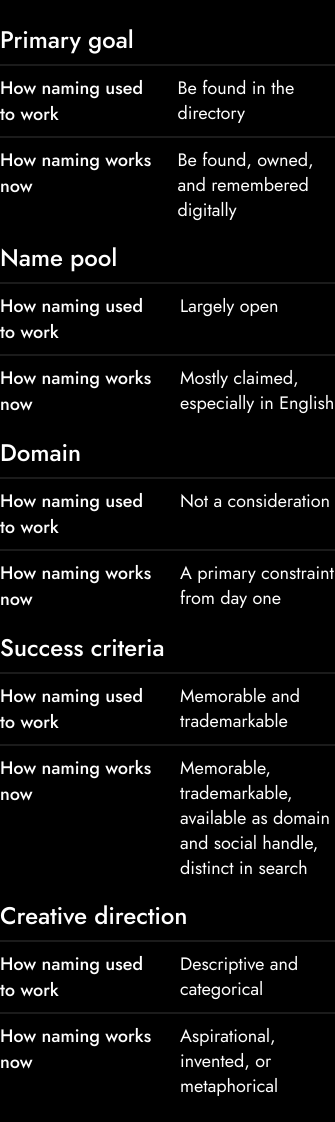
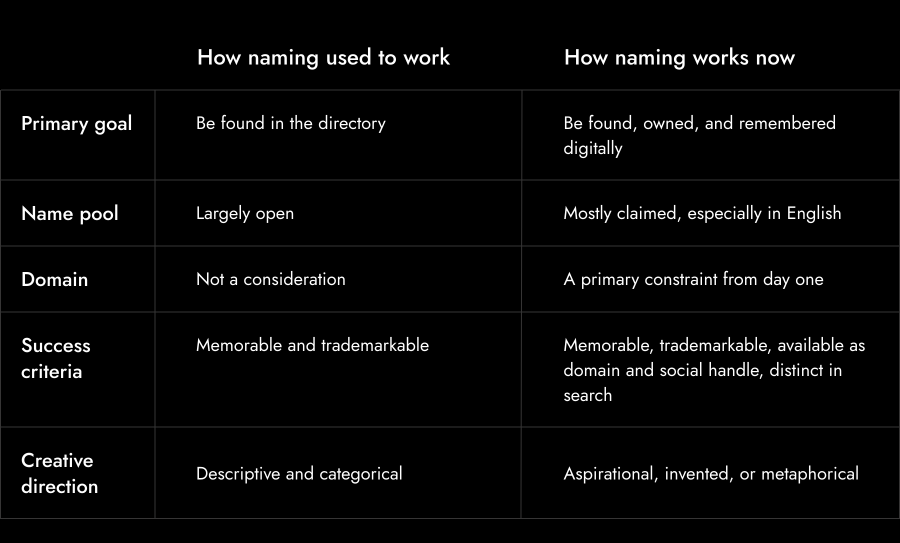
How naming used to work, and how it works now
Before the internet, naming had its own version of search optimisation: appearing early in the Yellow Pages was a real commercial advantage, which is why businesses called themselves Aardvark Plumbing or AAA Electrical. The name was a filing mechanism as much as an identity. The pool of names was vast, and the main tests were whether a name was memorable and whether it could be trademarked.
The internet did not make naming easier. It made it harder.
| How naming used to work | How naming works now | |
|---|---|---|
| Primary goal | Be found in the directory | Be found, owned, and remembered digitally |
| Name pool | Largely open | Mostly claimed, especially in English |
| Domain | Not a consideration | A primary constraint from day one |
| Success criteria | Memorable and trademarkable | Memorable, trademarkable, available as domain and social handle, distinct in search |
| Creative direction | Descriptive and categorical | Aspirational, invented, or metaphorical |
The most immediate constraint is domain availability. The English language has a finite number of meaningful words, and the most valuable combinations were claimed decades ago. The chance of finding a short, real-word domain that is available, free of trademark conflict, and right for the brand is vanishingly small. That scarcity has pushed naming towards aspiration, metaphor, and invented language rather than category description.
“The brief is harder. The bar is higher. The pool of options is smaller.”
What a name now needs to do
Clarity, distinctiveness, longevity, and scalability have always mattered. Digital reality has added practical requirements alongside the strategic ones.
Searchability. A common word or phrase is almost impossible to own in search. A name that is unique, or that combines familiar elements in an unfamiliar way, can be found and associated with the brand quickly.
Digital ownership. Can you secure the domain you need? Are the social handles available? Is the name clear enough that people find it when they type what they heard, rather than a near-miss that leads somewhere else?
Aspiration. Where category-descriptive names are either taken or forgettable, the names that last reach for something larger than the product: a world, a feeling, a transformation, rather than a function.
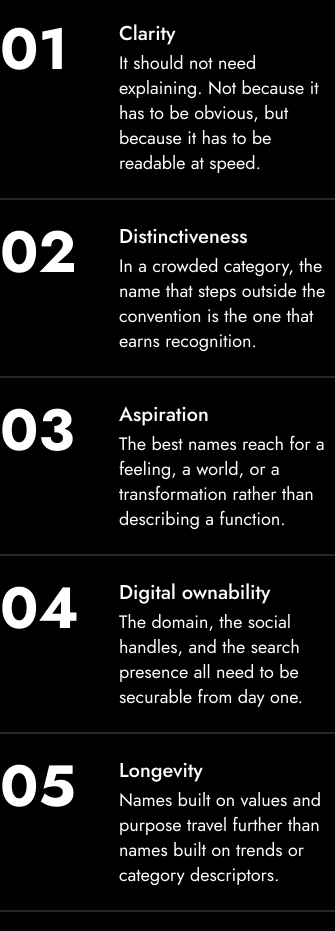
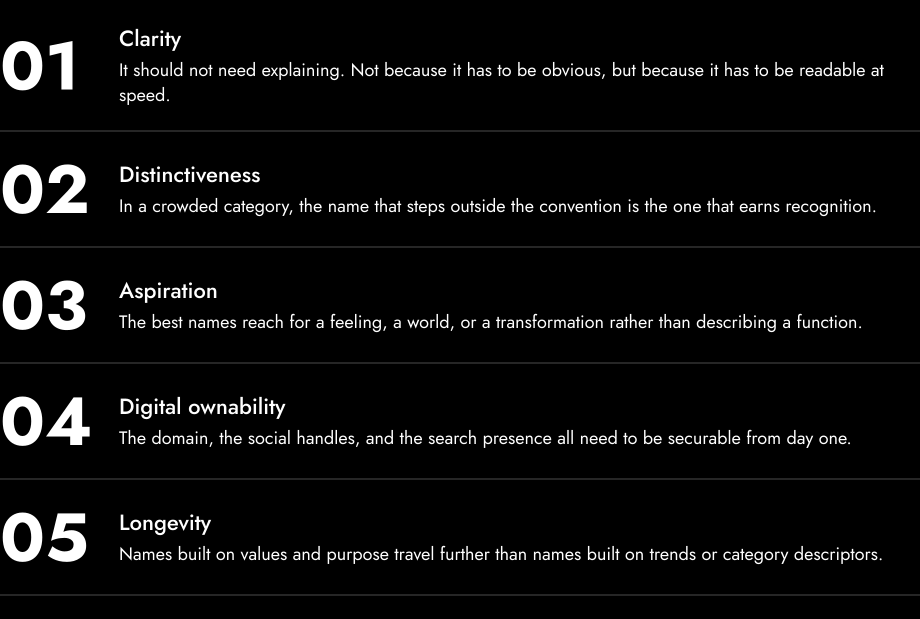
“In the Yellow Pages era, two of these mattered. Now all five do.”
Check trademark and availability early, not late
The single most expensive naming mistake is falling in love with a name before checking whether you can use it. Availability checking should run in parallel with shortlisting, never after it. That means checking the UK trade mark register at the Intellectual Property Office for conflicts (trade marks are registered by class of goods and services under the international Nice classification, so check the classes that matter to you), checking the name at Companies House, and confirming the domain and social handles, all before the team invests in a name emotionally. One nuance worth knowing: a name being free at Companies House is not the same as it being clear to trade mark. The two registers are independent, so a company name can be available and still conflict with a registered mark. Build availability into the assessment from the start and you change the economics of the whole exercise.
What it looks like in practice
When we named Contour, a leadership club in the pharmaceutical sector, the exploration ran through a significant number of candidates rooted in the language of leadership and pharma. Many were logical, most were either taken or insufficiently distinctive. The direction that worked leaned into the brand's values rather than its category. Contour makes the audience feel something: the sense of mapping out what comes next, of carving out what leadership in a complex market actually means. It is aspirational without being vague, distinctive without being opaque, and it can be owned digitally in a way a generic leadership term never could.
We have taken the same approach naming a company from scratch, when Stilwell Grey became Vantage Accounting, and naming a service, when a well-loved Center Parcs delivery offer became Restaurant Runner. In each case the name came from the strategy, and the availability check filtered the shortlist. That order is the whole discipline.
The process that makes naming possible
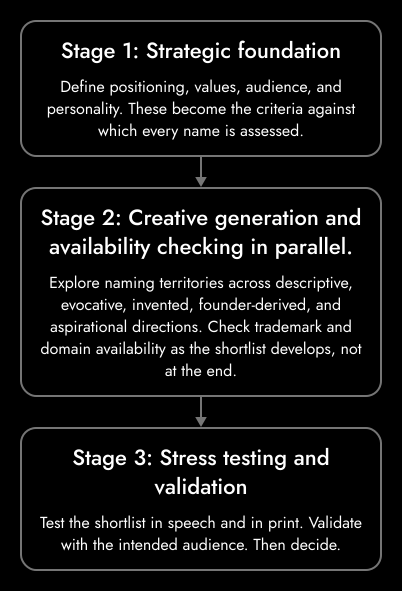
Good names emerge from a clear strategic foundation. Before a name can be judged, the brand's positioning, values, audience, and personality need to be defined; those become the filter every option is assessed against. Options that fit move forward; those that do not, however appealing in isolation, are set aside.
The creative process then generates candidates across several territories: descriptive, evocative, invented, founder or geography-derived, metaphorical. Volume matters, because so many options fail the domain and trademark tests, so the initial pool needs to be far larger than most clients expect. Availability checking happens alongside shortlisting, and the survivors are stress-tested in speech, in print, at small sizes, and across markets, then validated with the intended audience wherever possible rather than just the people in the room.
What to avoid
Choosing a name because the domain is available rather than because it is right inverts the brief; the domain check is a filter on the shortlist, not the basis for it. Choosing a common word and hoping to own it in search is an increasingly expensive mistake. Choosing a name the founding team loves without testing it with the audience reliably creates something that works in the room and nowhere else. And choosing a name without the strategy in place remains, as it always has, the most common source of names that have to be worked around for years. Naming is one stage of a broader identity process that continues into visual identity and every decision after it.
Three stages of the naming process
“The pool needs to be bigger than you think. The filter needs to be applied earlier than most people expect.”
Sources
GOV.UK, search the UK trade mark register, and get information about a company at Companies House.
CITMA, on trade mark classification, and WIPO, the Nice Classification.
Naming in practice: Contour, Vantage, and Restaurant Runner for Center Parcs, Saint Associates.