
A brand positioning strategy is the deliberate process of deciding where your brand should sit in the market relative to competitors, and then building the brand so that position is consistently communicated and credibly held. The word relative is doing the work: positioning is not self-description, it is understanding how your ideal customer sees their options, where the gaps are, and which gap you are genuinely best placed to own.
Most businesses can tell you what they do. Very few can tell you where they sit relative to everyone else competing for the same clients, and why a specific person in a specific situation should choose them. That gap, between describing a service and owning a position, is where positioning work lives. This guide covers how to find a position worth owning, how to write it down, and what it takes to hold it. For the broader question of what positioning is and why it matters, see our companion piece on brand positioning; this one moves from what to how.
The short version
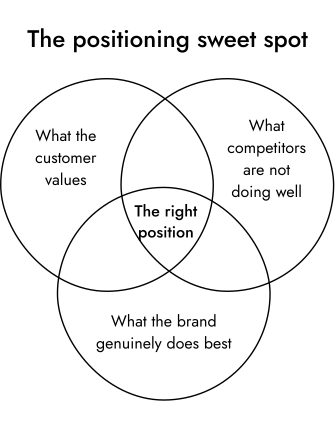
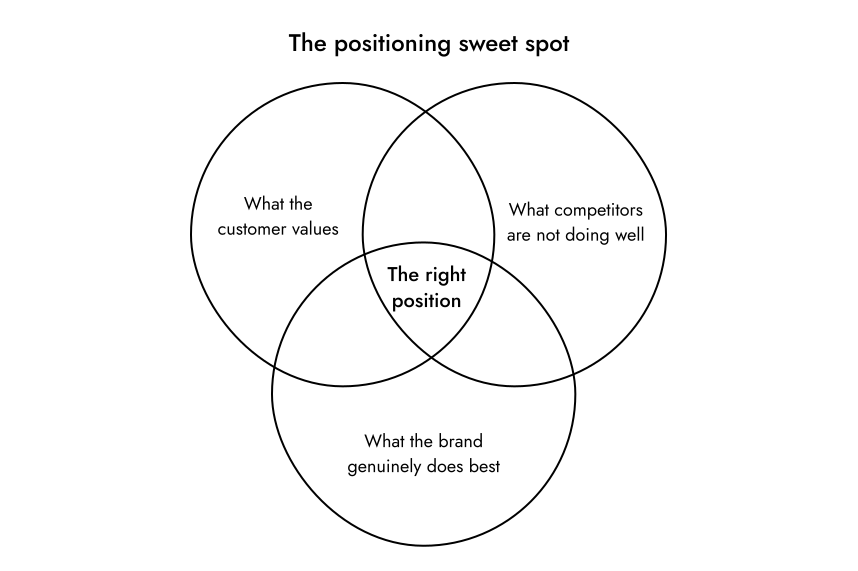
A good positioning strategy sits at the intersection of three things: something your target customer genuinely cares about, something competitors are not doing well, and something you can credibly deliver and sustain. Find that, write it into a positioning statement, and make it structural, not cosmetic, so it holds over time.
A positioning strategy answers three questions
In sequence: who is the target customer, and what does the competitive landscape look like from their perspective? Where is there a position that is both relevant to that customer and different from what everyone else offers? And what does the brand need to do and say consistently to own that position over time?
Why most positioning strategies fail
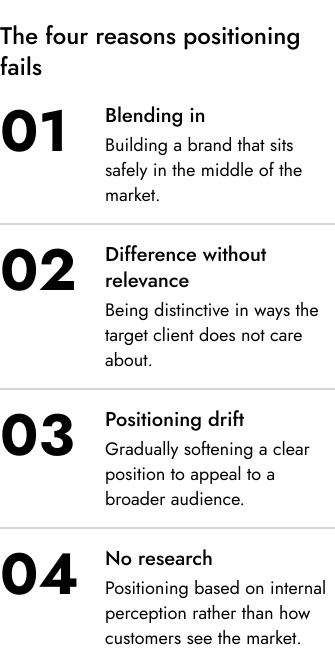
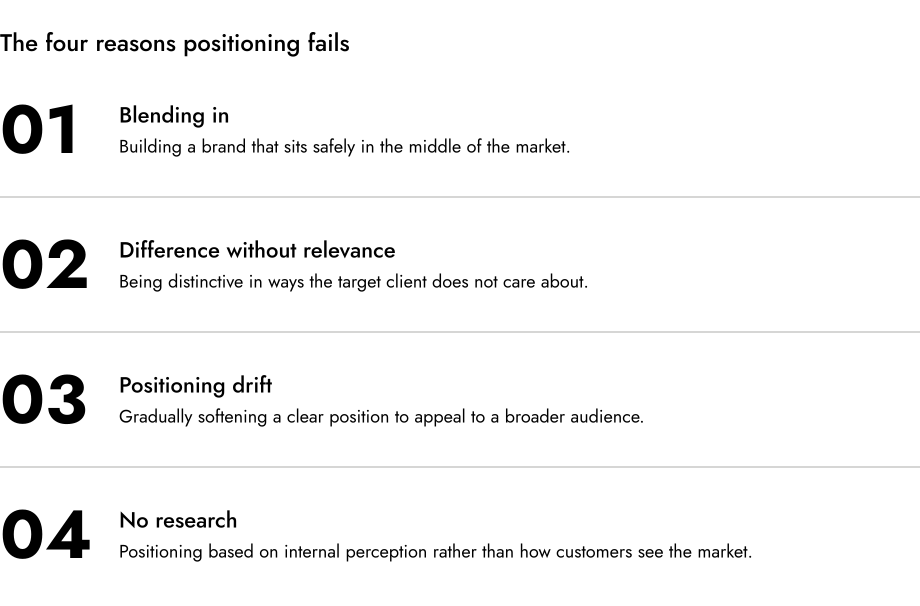
Four failure modes account for most of it.
Blending in. Usually through caution, not negligence. Businesses look at what competitors do, decide it looks sensible, and build a brand that sits comfortably in the middle. Same language, same visual conventions, same claims about quality and service. The result offends nobody and is remembered by nobody. Blending in is not neutral; it is a choice with a commercial cost.
Chasing difference for its own sake. Difference without relevance is just noise. Being the only firm in your sector using a particular methodology is only meaningful positioning if your ideal clients care about it. Relevance matters more than uniqueness.
Positioning drift. A business finds a clear position, communicates it well, then softens it over time to appeal to a broader audience or answer competitive pressure. The specificity that made it work erodes, and the brand drifts back to the middle without ever deciding to.
Skipping the research. Businesses start by looking inward, listing values and services. Useful raw material, but not a strategy until it is tested against how customers actually see the market. You might believe you are the premium option; your customers might experience you as the convenient one. That gap is where positioning falls apart.
How to find a position worth owning
Look at three things at once: the customer, the competition, and your own genuine strengths.
Start with the customer. Who is the ideal client, what are they trying to solve, and how do they think about their options now? "Growing businesses" is not a customer definition. "Professional-services firms with 20 to 50 staff that have outgrown their founding brand and are losing pitches they should be winning" is one you can actually act on.
Map the competition. Who else is competing for that customer, and what positions do they already hold? A simple two-axis positioning map, plotting rivals on the dimensions that matter to the customer (specialist versus generalist, traditional versus modern), shows where the space is crowded and where there is room.
Look honestly at what you do well. Not aspirationally, in practice. Where do you consistently deliver something better than the alternatives? What do your best clients say when asked why they chose you? That is the raw material of a credible position.
The right position sits at the intersection of all three: something the customer cares about, something competitors are not doing as well, and something you can genuinely deliver and sustain.
Writing a brand positioning statement
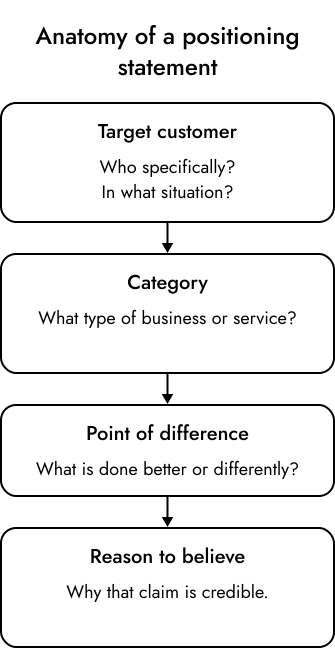
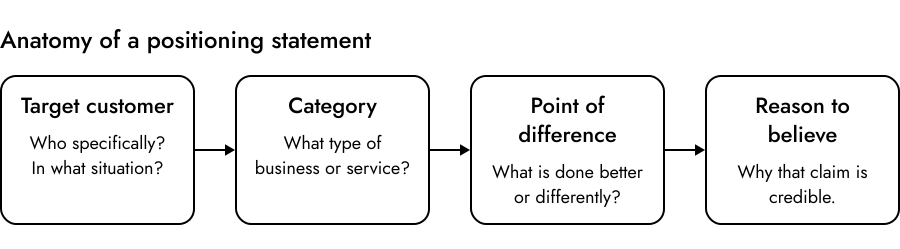
A positioning statement is a short internal document that captures the position precisely enough to guide every brand decision that follows. It is not a tagline and it is not for external audiences. It is a decision-making tool, and it covers four things.
| Element | The question it answers |
|---|---|
| Target customer | Who exactly is this for? |
| Category | What space do we compete in? |
| Point of difference | What do we offer that others do not? |
| Reason to believe | Why should anyone believe the claim? |
The test is specificity. If the customer description could apply to almost any business in the category, it is too broad. If the point of difference could be claimed by any competitor without it feeling obviously wrong, it is not a point of difference. A good statement should feel slightly uncomfortable, because that discomfort usually means a real choice has been made.
Positioning in a market where everyone looks the same
The hardest, and most valuable, positioning work happens in commoditised markets. When we worked with Nationwide Conveyancers, the challenge was exactly that: a crowded conveyancing market where, in their words, most providers look and sound the same. Generating leads was not the problem; standing apart enough to convert them was. The positioning work, and the brand and website built on it, was about giving the right clients a reason to choose them rather than the next identical option. That is what positioning earns you: not just visibility, but preference.
How positioning shapes identity and tone
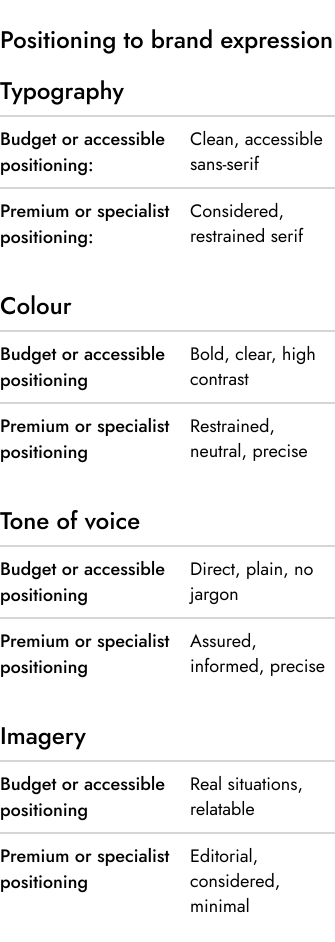
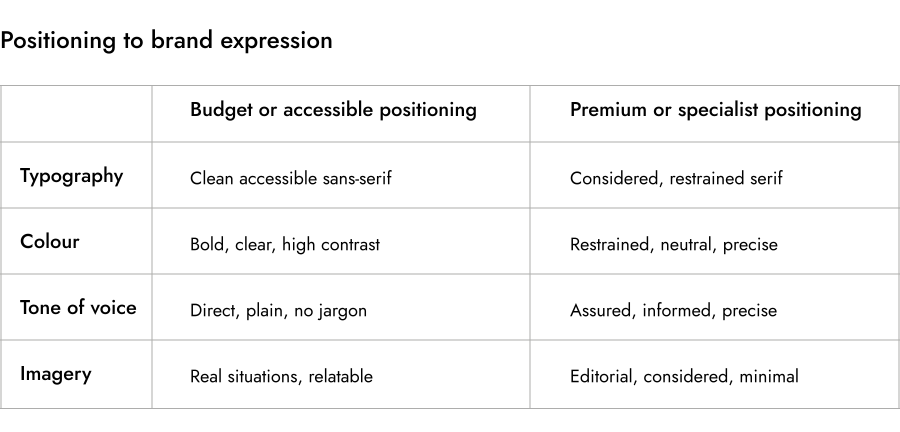
Once the position is clear, it becomes a filter for every brand decision. Consider two firms in the same category. One is positioned as the accessible, no-nonsense option; the other as the specialist, high-touch partner. Both are legitimate, both can succeed, but they need completely different brands.
The accessible brand needs an identity that feels approachable and clear: clean typography, direct language, real imagery, a website that gets to the point. The specialist brand needs the opposite: a restrained visual identity that signals expertise and discretion, and a tone of voice that assumes an intelligent reader. Positioning is not a description of what the brand looks like; it is the reason why. Every choice should trace back to the position you are trying to hold.
How to hold a position over time
Finding a position is one challenge; holding it is the harder one. Positioning erodes gradually, not all at once, as a business scales, broadens its client base, or softens its claims under competitive pressure. Each decision seems reasonable; the cumulative effect is a brand back in the middle of the market.
Holding a position means making it structural rather than cosmetic: the identity reflects it, the tone reinforces it, the website communicates it, the case studies demonstrate it, and the team can articulate it. Positioning that lives only in a document is not positioning, it is an intention. It also takes the willingness to say no. A brand with a clear position turns away some work because it falls outside that position. That feels counterintuitive when you are trying to grow, but it is exactly how positioning compounds: every piece of work inside the position strengthens it, every piece outside dilutes it.
Sources
Al Ries and Jack Trout, Positioning: The Battle for Your Mind (McGraw-Hill, 1981), which coined and formalised modern positioning.
Harvard Business School Online, on the positioning statement.
Positioning in practice: Nationwide Conveyancers, Saint Associates.