
The short version
Tone of voice is how your brand's personality becomes audible. It should flow directly from your positioning, not from a list of adjectives. Get it right and it reinforces everything else; get it wrong and clients feel the disconnect even when they cannot name it. There is no neutral.
What brand tone of voice actually means
Tone of voice is how a brand's personality and values become audible. Every email, proposal, social post, and automated confirmation is either reinforcing what the brand stands for or quietly contradicting it, which is why it cannot be left to whoever happens to be writing that day.
It helps to separate brand voice from tone of voice, because the two get confused.
| Brand voice | Tone of voice | |
|---|---|---|
| What it is | The underlying character expressed through language | How that character adapts to the situation |
| Does it change? | Constant, whatever the context | Flexes: warmer when welcoming, more precise when answering a technical question |
| Example | A confident, direct personality | The same personality, softened in a welcome email and sharpened in a complaint reply |
The voice is constant, the tone adjusts, and both need to be defined deliberately.
Why tone of voice is a positioning decision, not a style choice
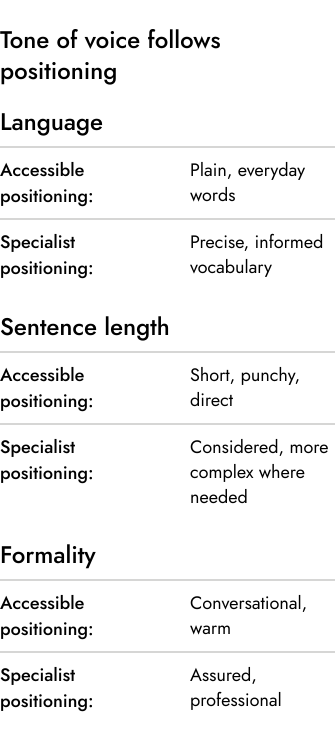
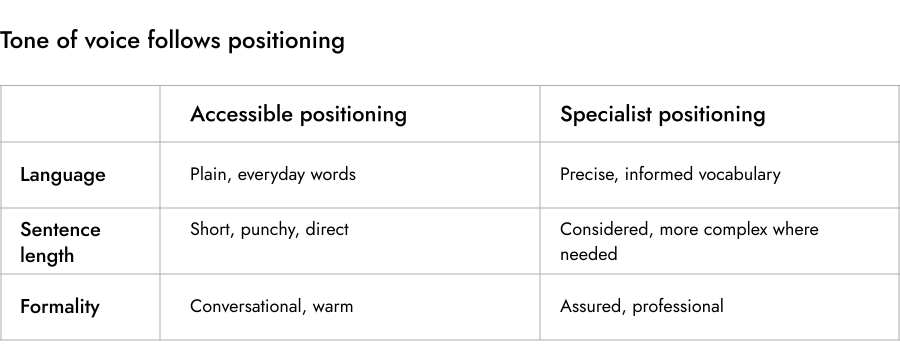
This is the point most guides miss, and the most important one. A brand's tone of voice should be a direct expression of its positioning. A business positioned as the accessible, no-nonsense option needs a plain, direct, jargon-free voice. One positioned as the specialist, high-touch partner needs a voice that is assured, precise, and assumes an informed reader.
Get it wrong and you create a disconnect clients feel even when they cannot name it. A premium-positioned brand that writes casually signals something different from what its identity claims. A brand built on warmth that writes in cold, formal language makes the same mistake in reverse. The tone either confirms the positioning or contradicts it. There is no neutral. That is also why tone of voice cannot be defined before the positioning is; the tone follows the position, not the other way round.
What tone of voice is not
A lot of what gets called tone of voice work is something else.
It is not a list of adjectives. "We are professional, friendly, and innovative" is a description of how you would like to be seen, not a tone of voice. Adjectives give no guidance on whether to use a contraction, or lead with the benefit or the feature.
It is not a set of dos and don'ts. Banned-word lists are useful reference, but they are symptoms of a voice that has not been defined clearly enough to guide writing without a checklist.
It is not the same as being friendly. Some of the most distinctive brand voices are formal, restrained, and precise. The voice needs to fit the brand, not conform to a generic idea of approachable.
What good tone of voice guidelines contain
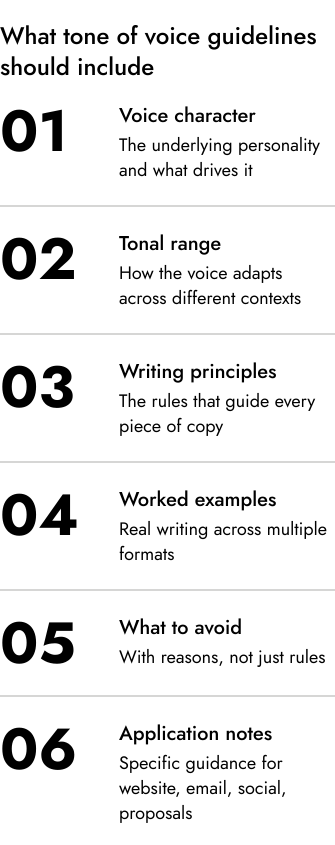
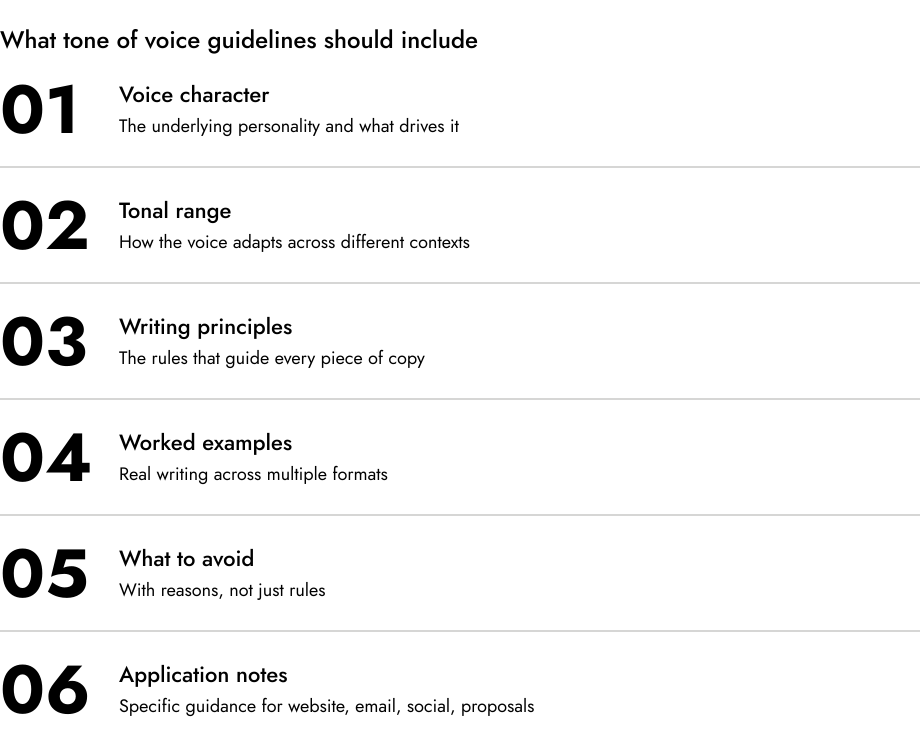
Guidelines that actually change how a business communicates go beyond description into demonstration. They show the voice in action through real examples and before-and-after rewrites across different contexts: a website headline, an email reply, a social post, a proposal opening. They explain not just what to write but why, tying each principle back to the positioning. And they address the hard situations most guidelines ignore, complaints, rejections, difficult conversations, automated messages, because those are the moments that matter most to how a client experiences the brand.
A useful way to pin a voice down, from Kate Moran's research at Nielsen Norman Group, is to place it on four spectra: formal to casual, serious to funny, respectful to irreverent, and matter-of-fact to enthusiastic. Deciding where the brand sits on each is far more directive than a pile of adjectives.
What consistency looks like in practice
The brands with the strongest tone of voice share one trait: consistency. Their communications feel like they come from the same place regardless of channel, author, or context, and that is not accidental. It comes from defining the voice clearly enough that different people can write in it without producing noticeably different results.
The Mural Crown project is a good illustration. A wealth management firm that needed to reach a broader audience without losing the trust of its existing clients. The voice we developed was assured and calm, informed without being condescending, and precise without being cold, and it had to work across a new website, social content, and client communications without sounding identical in each. The key was defining the underlying character clearly enough that it could flex without fragmenting. We did the same when we gave Vantage Accounting a tone that was straightforward and reassuring, so the rebranded firm sounded as approachable as it now looked.
How to define your brand's tone of voice
The process does not need to be complicated, but it does need the right foundations.
Start with positioning. Who is the brand talking to, and what does that person need to feel in order to trust and choose it? Calibrate the voice to that person and that need.
Then define the character, not in adjectives but as a personality. What kind of person would this brand be if it were human? What would it say at a first meeting? How would it handle a difficult conversation?
Then demonstrate it. Guidelines only become useful when they show the voice in action across real writing and across the full range of situations the brand will face, not just the easy ones. Tone of voice is one element of a brand identity that has to work in concert with the visual identity and the positioning. When all three point the same way, the brand becomes recognisable and trusted in a way no single element manages alone.
Sources
Kate Moran, Nielsen Norman Group, The Four Dimensions of Tone of Voice.
Mailchimp Content Style Guide, on voice and tone: "the same voice all the time, but your tone changes".
Tone of voice in practice: Mural Crown and Vantage Accounting, Saint Associates.