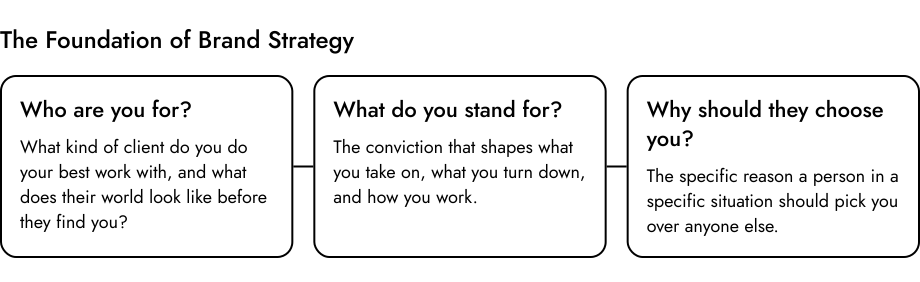
Brand strategy is the set of deliberate decisions that determine how your business is understood, remembered, and chosen. It is not your logo, your colours, or your website; those are expressions of a brand strategy, not the strategy itself. At its core it answers three questions every business has to answer, whether it does so consciously or not: who are you for, what do you stand for, and why should they choose you?
Most business owners have heard the term. Fewer can define it, and a surprising number have paid for something called brand strategy without being entirely sure what they got. This guide cuts through the confusion: no jargon, no 47-step frameworks, just a clear explanation of what brand strategy actually is, why it matters, and what it looks like when it is working inside a real business.
The short version
You already have a brand, whatever people think and feel when they encounter your business. The question is whether you are in control of it. Brand strategy is how you take control, by answering, honestly and specifically, who you are for, what you stand for, and why anyone should choose you. Everything else is built on those answers.
What brand strategy is not
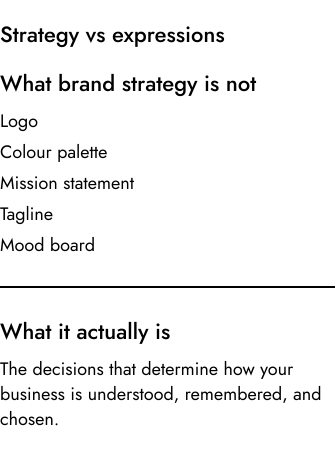
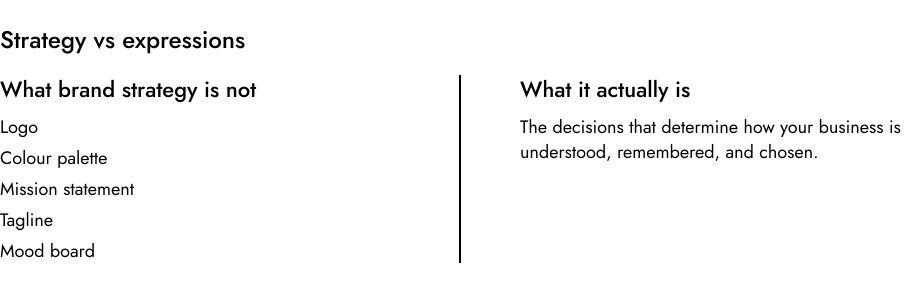
It helps to clear up what it is not, because that is where the confusion starts. Brand strategy is not your logo. It is not your colour palette, your typography, or your visual identity. It is not your mission statement, your tagline, or the values on the office wall. These can all be expressions of a brand strategy, but they are not the strategy.
This matters because most businesses invest in the expressions before they have done the thinking. They brief a designer before they can answer the questions a good designer will ask. They build a website before they know what it should say. Then they wonder why nothing quite feels right, or why a rebrand did not move the needle.
So what is it, then?
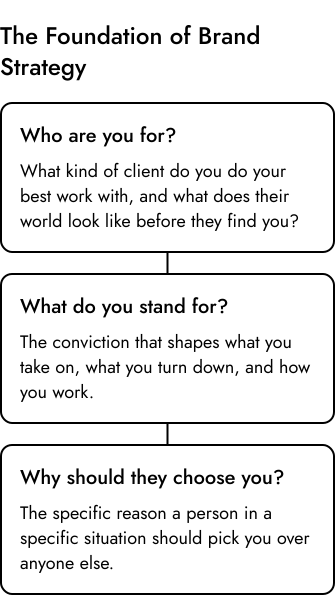
Brand strategy is the set of deliberate decisions that determine how your business is understood, remembered, and chosen. There is nothing mysterious about it. It answers three questions.
| Question | What it really asks |
|---|---|
| Who are you for? | Specifically, not aspirationally: what kind of client do you do your best work with? |
| What do you stand for? | Not a list of values, but a point of view that shapes what you take on and what you turn down |
| Why should they choose you? | Why should a specific person, in a specific situation, care, over the alternatives? |
When you can answer all three honestly and specifically, without reaching for vague language, you have the foundation of a brand strategy. Everything else, the visual identity, the website, the tone of voice, the way your team answers the phone, is built on top of those answers. Brand positioning is one component of it, and often the most commercially important.
Why brand strategy matters for growing businesses
Here is what most businesses only discover when growth slows. You already have a brand, whether you have thought about it or not; your brand is whatever people think and feel when they encounter your business. As Marty Neumeier puts it in The Brand Gap, a brand is "a person's gut feeling about a product, service, or organisation": it lives in people's heads, not in your logo. The question is not whether you have one, but whether you are in control of it.
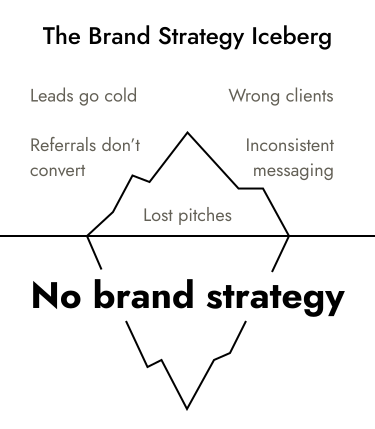
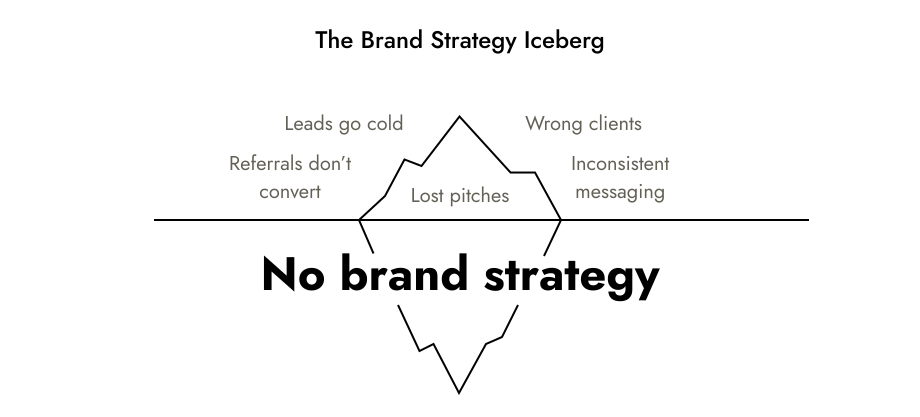
Without a strategy, your brand is being shaped by accident: by whoever answered the phone last Tuesday, by the gap between your website and your proposals, by the distance between what you say you are and what clients actually experience. That inconsistency has a cost, and it shows up in ways that do not look like brand problems: leads go cold, referrals do not convert, clients choose a competitor you know you are better than, pitches are lost and nobody can quite explain why. Those are symptoms. A missing or unclear brand strategy is often the diagnosis underneath.
What brand strategy looks like in practice
Understanding what it is matters less than understanding what it does. Three things change when the strategic foundations are clear.
Decisions get easier. A clear strategy is a filter. Does this opportunity fit who we are for? Does it reflect what we stand for? That replaces the subjective back-and-forth that slows most businesses down.
Briefing improves. When your team, designer, developer, and copywriter all work from the same strategic foundation, you stop having conversations that go in circles.
Growth becomes intentional. The right clients start to feel like a natural fit rather than a lucky accident, and the wrong ones are easier to spot before you have invested months in them.
When we worked with Make It Scotland, the strategy was to build foundations that compound: treating the identity, the user experience, and the growth plan as one joined-up system rather than separate deliverables. That is brand strategy doing its job, and it is what helped the platform scale from a personal project into a commercially viable business.
B2B brand strategy: a specific challenge
For business-to-business companies, brand strategy carries particular weight. B2B decisions involve multiple stakeholders, longer sales cycles, and far more scrutiny than most consumer purchases. A B2B brand that cannot articulate clearly what it stands for and who it serves is at a structural disadvantage before any conversation begins. It also has to bridge the rational and the emotional: the decisions may be presented as logical, but trust, credibility, and the sense that a supplier understands your world are shaped by brand long before the first meeting.
When to invest in brand strategy
Earlier than most businesses do. The usual trigger is a problem: growth has stalled, a rebrand is overdue, the website no longer reflects the business, or a new market beckons. All valid starting points. But the businesses that invest before they hit those ceilings are the ones that grow without constantly second-guessing themselves. Strategy built during a period of clarity is always more useful than strategy built under pressure. Understanding what brand strategy is should not cost you five figures, and that is what this guide is for. Doing it properly is a different conversation, but it starts here, with honest answers to three questions.
Sources
Marty Neumeier, The Brand Gap: "a brand is a person's gut feeling about a product, service, or organisation".
Brand strategy in practice: Make It Scotland, Saint Associates.