
The short version
A brand audit checks four things: positioning, consistency, market perception, and internal alignment. The best time to run one is before you need to, ahead of a rebrand, a big pitch, or a new market, so the decision that follows is based on evidence rather than instinct.
What a brand audit actually examines
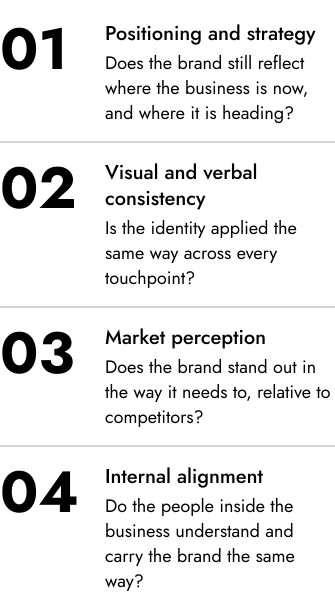
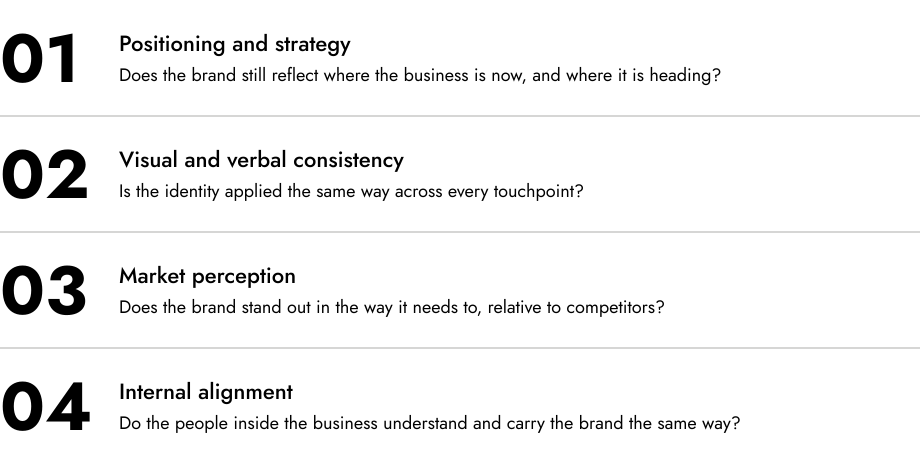
The word audit makes this sound more technical than it is. At its core it is a structured exercise in honest evaluation, and it breaks down into four areas.
| Area | The question it answers |
|---|---|
| Positioning and strategy | Does the brand still reflect where the business is now, not where it was? |
| Visual and verbal consistency | Is the identity applied the same way across the website, social, proposals, email, and print? |
| Market perception | Does the brand stand out from competitors, or blend into the category? |
| Internal alignment | Do the people inside the business understand and carry the brand consistently? |
Positioning and strategy. Brands drift, and that drift is almost impossible to see from inside the business. The question is whether the brand still tells the story of where the business is, rather than where it was.
Visual and verbal consistency. Inconsistency in how a brand shows up usually reflects a brand that has grown faster than its guidelines have kept up with, rather than a brand in fundamental crisis.
Market perception. A brand that blends into its category rather than standing apart becomes invisible, however well-intentioned the work behind it.
Internal alignment. When teams grow beyond the founding circle, a brand's meaning can fragment in ways that are hard to detect from the top.
“A brand audit looks at all four. Examining only one gives you a partial picture.”
When a brand audit makes sense
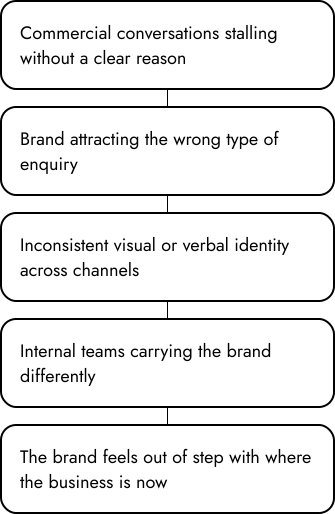
The most obvious trigger is when something feels off: sales conversations stalling at the same point, the wrong type of enquiry coming in, or a business that has grown while the brand has stood still.
The more useful trigger, though, is before something visibly breaks. Waiting for the warning light before you check the engine is the more expensive approach. By the time the symptoms show, the brand has usually been working against the business for longer than anyone realised.
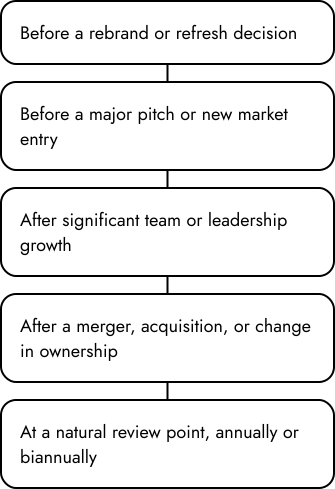
There are also specific moments that call for one. Before a rebrand or a significant refresh, an audit gives you an evidence base instead of instinct. Before a major pitch to a larger or more senior client, knowing how the brand is really perceived can be the difference between winning and stalling. Before entering a new market or launching a new product, it confirms whether the existing brand can carry that expansion credibly.
What the audit produces
A useful audit produces a clear view of where the brand is working well, where it is working against the business, and what the priority actions are, ranked by impact rather than by ease.
Some audits conclude that the fundamentals are sound and the fix is largely executional: better guidelines, more consistent application, a targeted visual refresh. Others reveal that the positioning has drifted and a more substantial rebrand is warranted. That distinction, between a refresh and a full rebrand, is one of the most valuable things a properly conducted audit can settle. It also has a real bearing on cost, which we cover in our guide to what a rebrand costs.
The audit earns its value by informing the decision, which is why it has to come first. Run it afterwards and you get retrospective justification rather than a reliable basis for action.
Signs an audit is overdue vs moments for a protective audit
Signs an audit is overdue:

Good moments for a proactive audit:

“The best time to audit a brand is before you need to.”
How we approach a brand audit
At Saint Associates, a brand audit begins before any creative work is considered. We look at the business's positioning, its competitive context, and the consistency of the brand across every touchpoint. The findings feed directly into a strategic recommendation, whether that is a refresh, a full rebrand, or, in some cases, confirmation that the brand is in better shape than it feels.
When we rebranded an established accountancy firm from Stilwell Grey to Vantage Accounting, the work started with exactly this kind of honest look at what the existing brand was and was not doing, before a single design decision was made. The process is structured, but the conversations are direct. Understanding a brand's real condition means asking honest questions and being ready to hear honest answers.
Three-step audit process
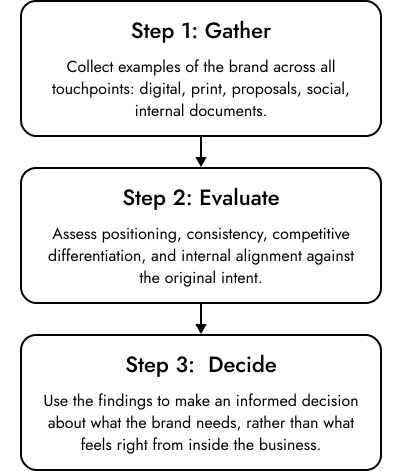
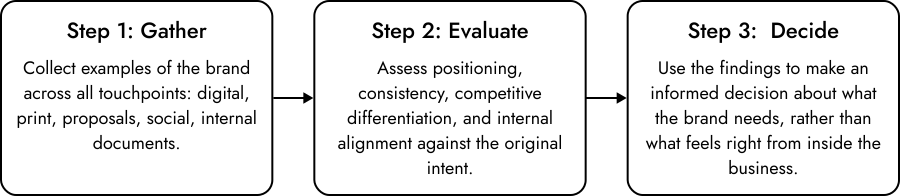
“The discipline is in the order. Deciding before you evaluate is the most common mistake.”
Sources
Kevin Lane Keller, Strategic Brand Management, the foundational brand-audit framework (a brand inventory of how you present the brand, plus a brand exploratory of how the market perceives it).
Qualtrics, on brand health, and Kantar BrandZ, on brand strength and long-term financial performance.
A brand audit in practice: Vantage Accounting, Saint Associates.