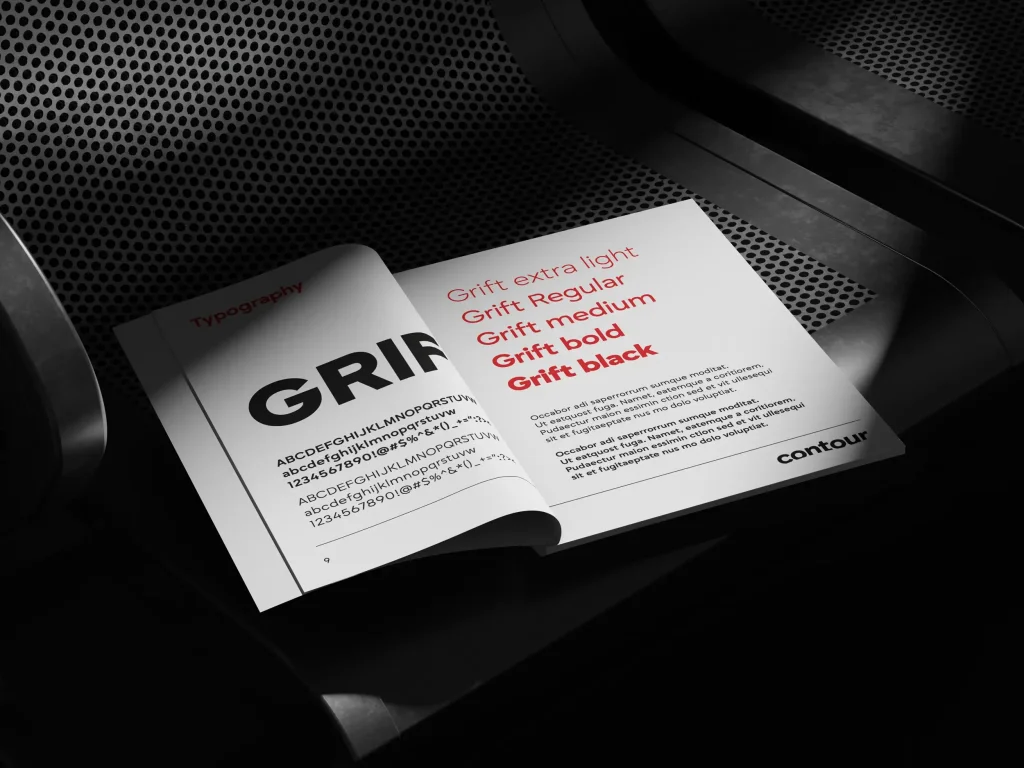
A rebrand is a strategic decision to change how a business is positioned, perceived, or presented, and often all three at once. It is one of the most significant investments a business can make in itself, and one of the most misunderstood. Done well, it transforms how a business is seen, who it attracts, and where it goes next. Done for the wrong reasons, it produces a new logo and very little else.
Most rebrands happen too late. A few happen too early. Almost none happen for exactly the right reasons. This guide covers how to tell when a rebrand is genuinely needed, when it is not, and what a rebranding process that actually delivers looks like.
The short version
Rebrand when the business has genuinely changed, through growth, a new market, a new audience, a merger, or associations that no longer fit. Do not rebrand to fix low visibility (that is marketing), to freshen a brand whose foundations are still sound (refresh instead), or before you have done the strategic thinking. A new name on an unchanged business is a distraction, not a rebrand.
What rebranding actually means
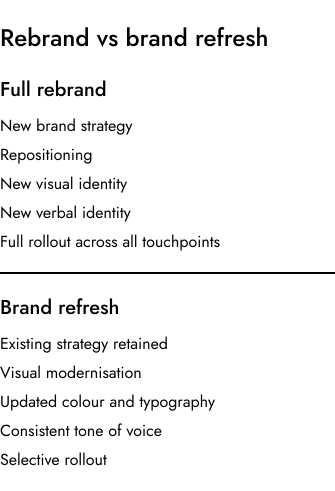
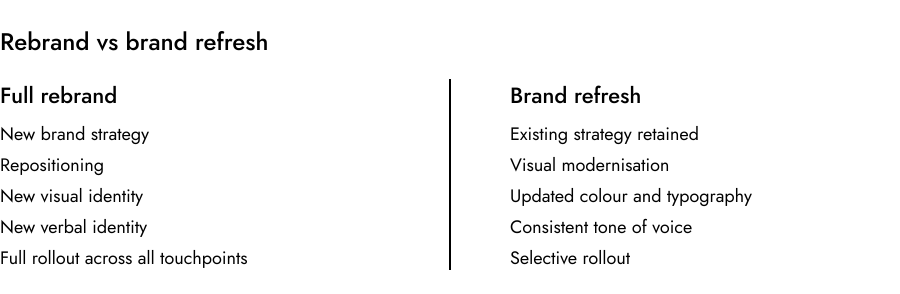
A full rebrand revisits the brand strategy, repositions the business, and rebuilds the visual and verbal identity from the ground up. A brand refresh is a lighter version of the same process, modernising an existing identity without changing the underlying positioning. Both are legitimate responses to different situations. The mistake is treating them as the same thing.
When to rebrand, and when not to
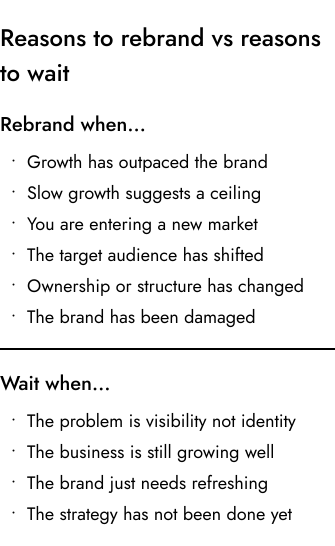
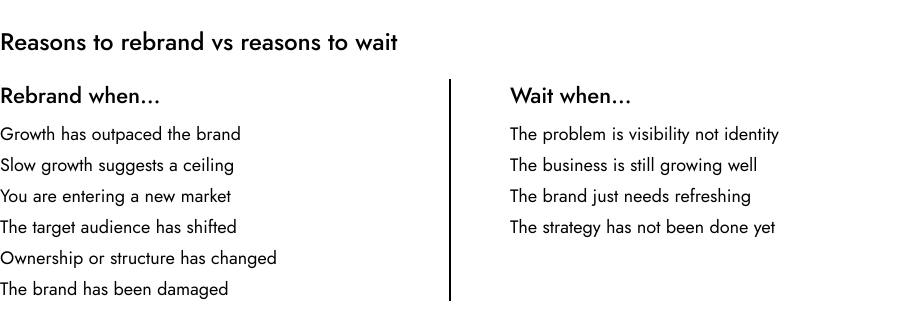
| Rebrand when... | Do not rebrand when... |
|---|---|
| The business has outgrown its original positioning | The real problem is that not enough people know you exist (that is marketing) |
| You are entering a new market or moving to a new audience | The brand feels tired but the foundations are sound (refresh instead) |
| Ownership changes, or two businesses combine | You have not yet done the strategic work |
| The brand carries associations that no longer fit | You want a quick fix without changing the business underneath |
The most common genuine trigger is growth, or more precisely the gap growth creates between what a business has become and the brand it is still presenting. The logo looks dated, the positioning feels vague, the website was built for a version of the business that no longer exists. Slow growth can be a signal too: when leads plateau or the right clients stop showing up, the instinct is to look at sales and marketing, but often a brand that made sense at an earlier stage has quietly become a ceiling. The brand that got you here is not always the brand that gets you further.
Equally, be honest about when a rebrand is not the answer. If the problem is visibility, a new logo will not fix it. If the foundations are sound and the brand is simply tired, a refresh is the proportionate response. And if the strategic work has not been done, a rebrand is premature: starting with the visual work is the fastest way to end up with a brand that looks different but functions exactly as before. The classic UK cautionary tale is Royal Mail's 2001 switch to Consignia: an opaque new name that discarded a trusted heritage brand and was reversed within about a year.
Rebrand versus refresh
A refresh keeps the strategic foundations and updates the expression: modernising the logo, refining the palette, tightening the tone of voice. The business stays recognisably itself. A full rebrand starts from the strategy and asks the fundamental questions again, who are we for, what do we stand for, why should they choose us, and rebuilds from the answers.
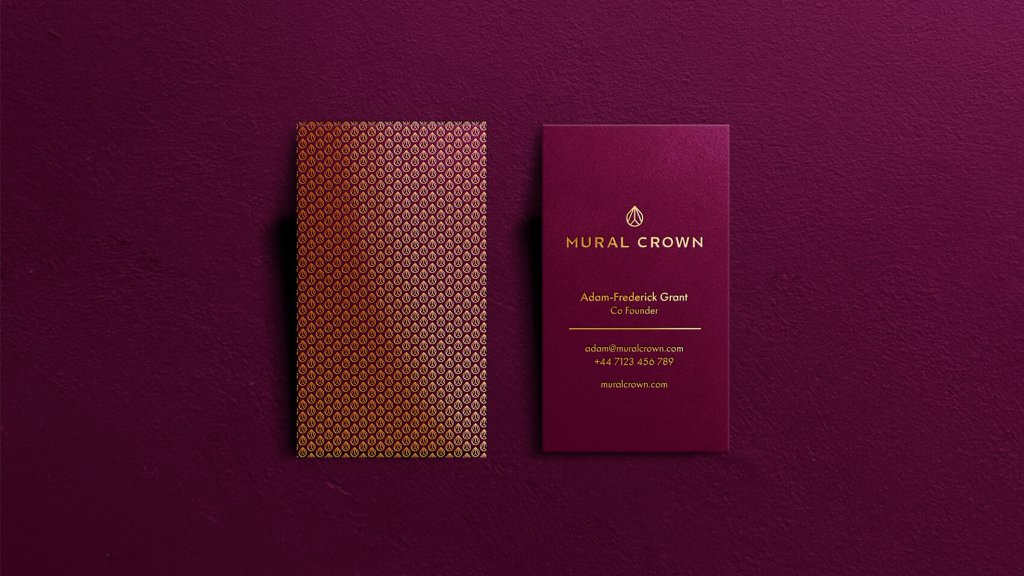
The Mural Crown project is a full rebrand done for the right reasons: a well-established wealth-management firm that had outgrown its brand and needed one that could carry it into a more competitive market without losing existing clients' trust. It started with strategy, moved through identity, and produced something genuinely new rather than cosmetically updated. We took the same strategy-first route when Stilwell Grey became Vantage Accounting, and when we rebuilt Nationwide Conveyancers around lead generation. For what each level typically costs, see our rebrand cost guide.
What a rebranding strategy looks like
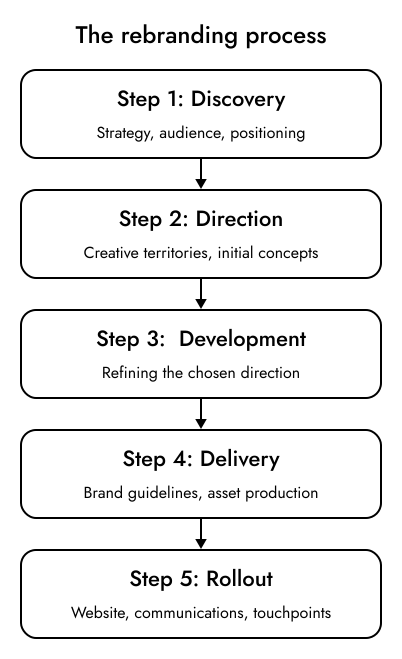
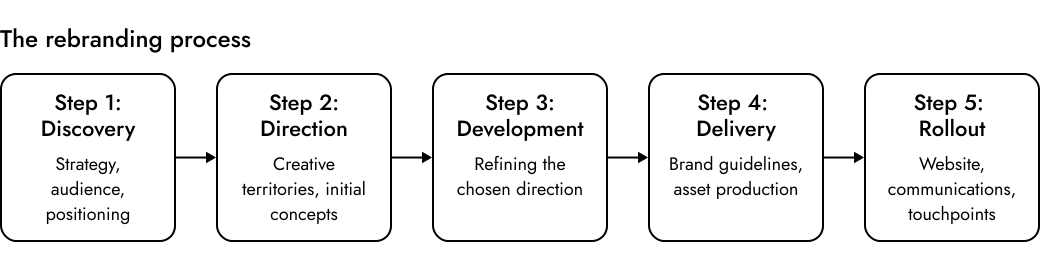
A rebranding strategy is not a plan for what the new brand will look like. It is a plan for what it needs to achieve. It starts with an honest brand audit of where the business is and what its current brand communicates, then establishes where the business wants to go and who it wants to serve. That thinking becomes the brief for everything that follows. Without it, the creative process has no anchor: decisions become subjective, feedback becomes circular, and the brief becomes "make it feel more premium" with no agreed way of knowing when that has been achieved.
What to do before you brief a rebranding agency
Three things are worth having clarity on, because the quality of the brief shapes the quality of the outcome. Know what the rebrand is trying to achieve in commercial terms, not visual ones: what should be different about the business afterwards? Know who the new brand needs to speak to, especially if the audience is changing. And know what is not changing: a rebrand is not a blank slate unless it needs to be, and understanding what equity to carry forward saves time and preserves value.
Sources
When to rebrand, and when not to: HubSpot, Frontify, and Forbes on rebranding mistakes.
The classic UK cautionary tale: Royal Mail's 2001 switch to Consignia and its 2002 reversal.
Rebranding in practice: Mural Crown, Vantage, and Nationwide Conveyancers, Saint Associates.