
The short version
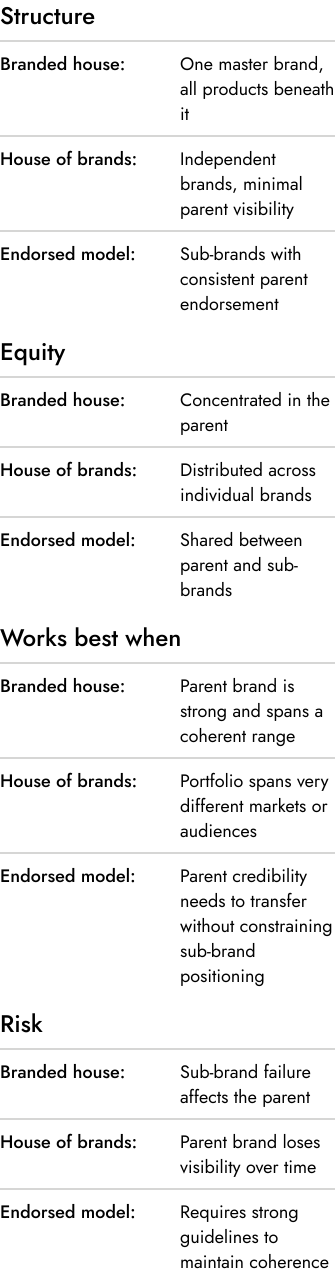
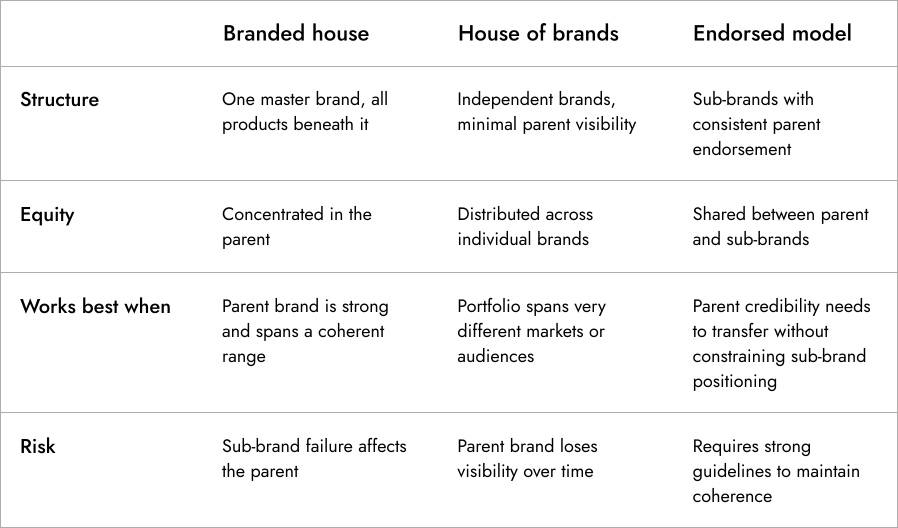
A branded house runs everything under one master brand (think Apple). A house of brands keeps each brand separate with the parent hidden (think Procter and Gamble). The endorsed model sits between the two, with distinct brands that carry a visible parent endorsement (think Marriott). Decide the architecture before any naming or design work begins, because it is difficult and expensive to reverse.
What brand architecture is
Brand architecture is the strategic structure that defines how the brands within a business or portfolio relate to each other. It sets the role of the parent brand relative to its sub-brands, the degree of visual and verbal connection between them, and the logic by which any new brand or product is positioned within the whole.
It is a strategy decision, and design follows from it. It needs to be settled before any visual or naming work begins. In our experience, the single most common and most expensive mistake is doing it the other way round: designing a sub-brand first, then trying to reverse-engineer a structure that justifies it.
The three main models
Most strategists trace these back to the brand relationship spectrum set out by David Aaker and Erich Joachimsthaler in 2000. Strictly, the spectrum runs across four positions, from a branded house, through sub-brands and endorsed brands, to a house of brands. The three models here are the ones most businesses actually choose between, and real portfolios often sit somewhere in between, which practitioners call a hybrid.
| Model | How it works | Best for | Example |
|---|---|---|---|
| Branded house | One master brand leads everything; sub-brands are named after or endorsed by the parent | A strong parent brand that can stretch across offerings without contradiction | Apple (Apple Watch, Apple Music) |
| House of brands | Each brand stands alone, with the parent largely invisible to customers | Portfolios spanning genuinely different markets or audiences | Procter and Gamble |
| Endorsed | Distinct brands with their own identity, visibly backed by a parent endorsement | Sub-brands that need their own character but benefit from the parent's credibility | Marriott's hotel brands |
The branded house, sometimes called a monolithic architecture, puts one master brand at the front of everything. Every product carries the parent's equity, and every launch reinforces it. It works best when the parent brand is strong, consistent, and able to span a broad range of offerings without contradiction.
The house of brands keeps each brand in the portfolio independent, with little or no visible connection to the parent. The parent may be well known to investors while staying invisible to consumers. It works best when the portfolio spans genuinely different markets or audiences, or when the parent brand would constrain a sub-brand's positioning.
The endorsed model sits between the two. Sub-brands carry their own name and identity but are visibly connected to the parent through a consistent endorsement, whether a logo, a descriptor, or a naming convention. The endorsement transfers credibility from the parent while letting each brand develop its own positioning.
In practice, most portfolios are hybrids, particularly businesses that have grown through acquisition or that span very different markets. The models are the starting point, not the final answer.
“Most real portfolios are hybrid. These models are the starting point, not the final answer.”
Two real examples we have built
The textbook examples are useful, but they are all household names. Here is how the same thinking plays out for real businesses.
When we created Restaurant Runner, the food delivery brand for Center Parcs, the architecture question came first. The service needed enough distinctiveness to be recognised and recommended in its own right, but it had to stay unmistakably part of Center Parcs. That is a textbook case for the endorsed model: its own name and character, backed by the credibility of one of the UK's most trusted hospitality brands.
The opposite call was right for Vantage Accounting, which we rebranded from Stilwell Grey. There, part of the value of the rebrand was a single, scalable brand that could support future growth without needing sub-brands at all. A branded house, chosen deliberately, so the business could expand under one name rather than fragment into several.
How to choose the right model
The decision follows from commercial and strategic reality, not from aesthetic preference.
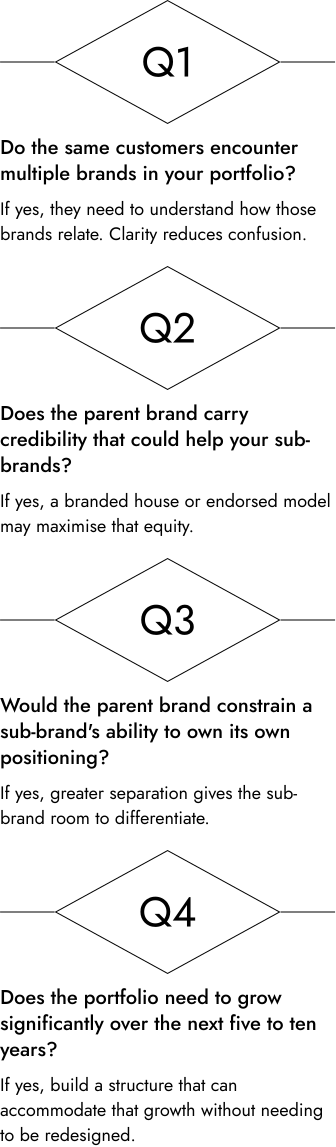
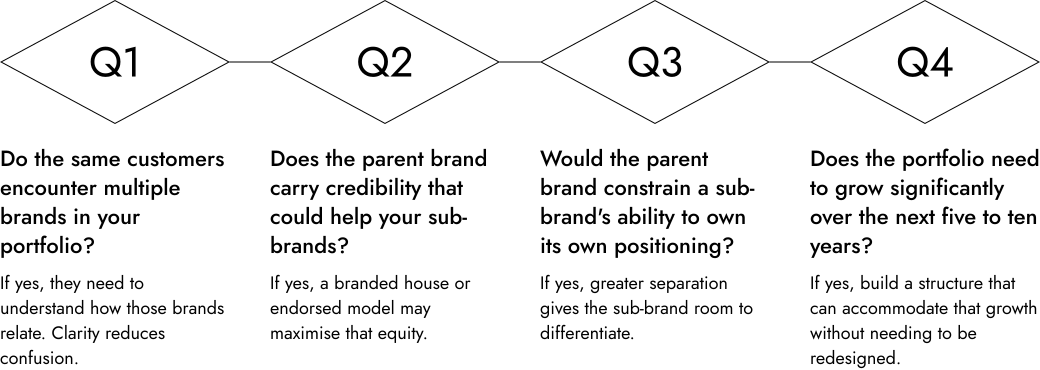
Start with the audience. If the same audience meets several brands in your portfolio, they need to understand how those brands relate; confusion at this level costs trust. If your brands serve genuinely different audiences with no meaningful overlap, the case for separation is stronger.
Consider the equity in each brand. If the parent carries real recognition and credibility with the right audience, a branded house maximises the return on it. If the parent would actively constrain a sub-brand, because it is known for one sector and the sub-brand is entering a very different one, more separation protects both.
Think about growth. Architecture decisions, like decisions about naming and core brand identity, are difficult and expensive to reverse. The model you choose today needs to fit the business as it is likely to be in five to ten years, not just as it is now.
Consider the internal implications too. Architecture shapes how teams think about their work, how resources are split across brands, and how day-to-day decisions on naming and design get made. A model that creates internal clarity is far more likely to be applied consistently than one that needs constant case-by-case judgement.
“Brand architecture decisions are difficult and expensive to reverse. Take the time to get them right.”
When architecture matters most
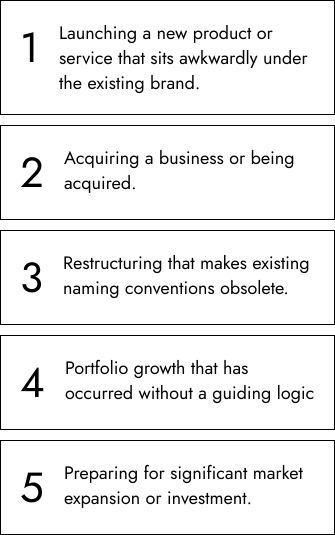
The question tends to surface at specific moments: when you launch a product that sits awkwardly under the existing brand, when you acquire or are acquired, when a restructure breaks the old naming logic, or when growth has produced a portfolio that evolved with no guiding logic at all.
At each of those moments there is pressure to resolve it quickly, usually to hit a launch deadline. That pressure is worth resisting. An architecture decision made in haste tends to create constraints that take years to work around. The architecture should lead, and the creative execution should follow from it.
Moments that call for a brand architecture
“Proactive architecture decisions are far cheaper than reactive ones.”
Sources
Aaker and Joachimsthaler, "The Brand Relationship Spectrum", California Management Review 42(4), 2000: the framework, and their book Brand Leadership (The Free Press, 2000).
Brand architecture case examples: Restaurant Runner for Center Parcs and Vantage Accounting, Saint Associates.